Back in college, our physics professor used to repeat quite often: it doesn’t matter what result you obtain if the margin of error is not calculated alongside it.
Many years have passed, but to this day I consider this idea — expressed in a very concise form — one of the key insights in understanding how to evaluate any result.
Most importantly, this principle provides a solid safeguard against errors in evaluation — and not only mathematical ones.
A simple example: imagine measuring a distance using only a one-meter ruler without any centimeter or millimeter markings. Anything below one meter would be measured with enormous error. Estimating by eye introduces a large uncertainty — plus or minus 10 or even 15 centimeters.
If you attempt to measure kilometers with such a tool, the problem becomes even worse. Terrain irregularities, curves, repetitions — all these objective factors introduce additional inaccuracies that are very difficult to eliminate.
This is the core problem of all measurement.
When evaluating models, processes, or phenomena, what truly matters is not the measuring tool itself, but its precision. More precisely, a tool or system without a clearly defined accuracy is like that ruler without markings — whatever it measures, the trust in such measurements remains extremely low.
How do we measure the quality of trading systems?
This leads to the key question: how should we measure the quality of trading systems in the market?
What result can be considered reliable — even close to guaranteed — given that the market is one of the most dynamic systems? Yet this does not mean it cannot be measured with a certain degree of accuracy. More precisely, the results of trading can be measured.
Why this question matters?
We raise this question not for you, but primarily for ourselves — as part of building and developing our project.
We consistently and cautiously communicate what may happen in our forecasts. This is not about uncertainty, but about how results and forecasts should be presented in principle.
The market is always something inside brackets — while outside there is always an unknown factor capable of instantly invalidating everything inside those brackets.
Against the background of endless marketing noise, a rational and honest discussion may seem dull and lacking excitement.
At times, it resembles talking about the risks of alcohol in the middle of a lively celebration — until the next morning arrives. Interestingly, even that “morning after” rarely motivates people to reassess their previous decisions.
Only a sequence of real failures and difficult situations forces one to reconsider what should truly be trusted and what should be approached with caution.
Engineering thinking, in fact, is thinking from the perspective of potential failure. Unlike many others, engineers are trained to recognize risks before they materialize.
Unfortunately, most people do not understand the nature of numbers. Extracting meaningful insights from data is difficult, and only a few are able to consistently identify what truly matters.
Objective criteria of a working trading strategy
So what are the truly objective criteria of a working trading strategy?
Surprisingly, the answer is much shorter than the reasoning that leads to it.
There is no more reliable criterion in trading than statistics — of a trader, a system, or a strategy.
Someone says: “We are successful.” Then show the account.
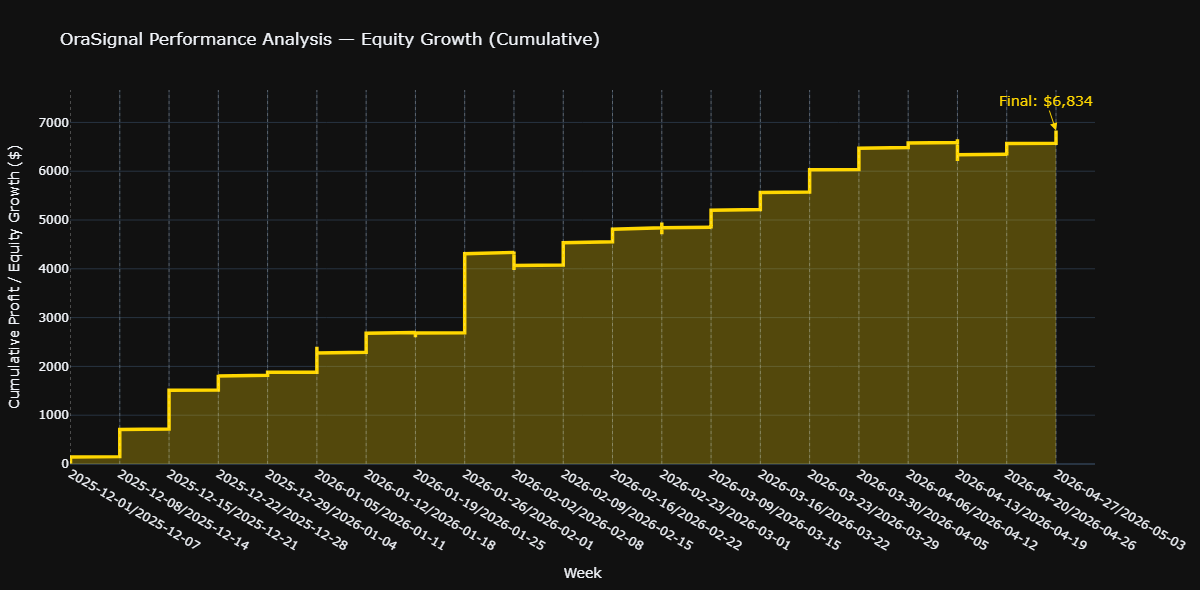
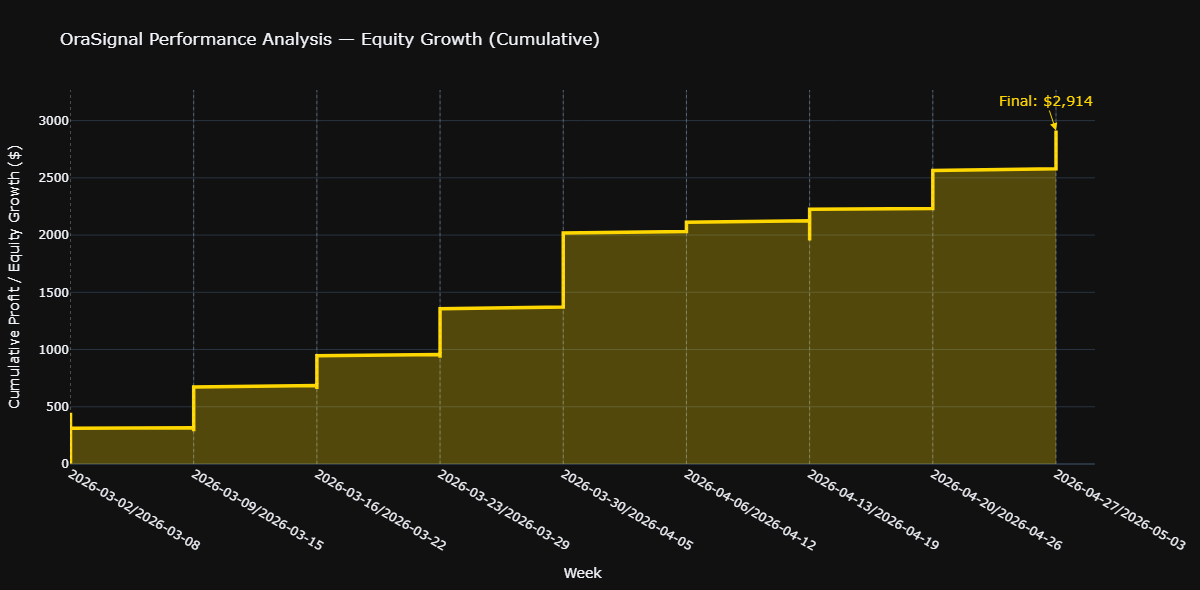
The first question: how many accounts? Truly strong performance is demonstrated by those who have dozens of profitable accounts and thousands of trades.
Even a modest profit factor of 1.1 is acceptable — but not negative performance. Otherwise, success is only temporary and inconsistent.
Can you imagine any business that is “great” overall but operates at a loss? How long could such a business realistically exist?
Let’s be clear: no accounts, no history, no data — it can be dismissed immediately.
However, if a strategy produces 10,000 trades with profit over a few months — while others cannot reach such volume even in 10 years — that is a different level entirely.
The second key criterion, alongside system longevity, is the number and diversity of trades.
For example, in recent years, gold experienced a strong upward trend driven by expectations of conflict. Many services and advisors suddenly became “gold specialists.”
However, when gold corrected significantly, many of these strategies failed, along with the accounts behind them.
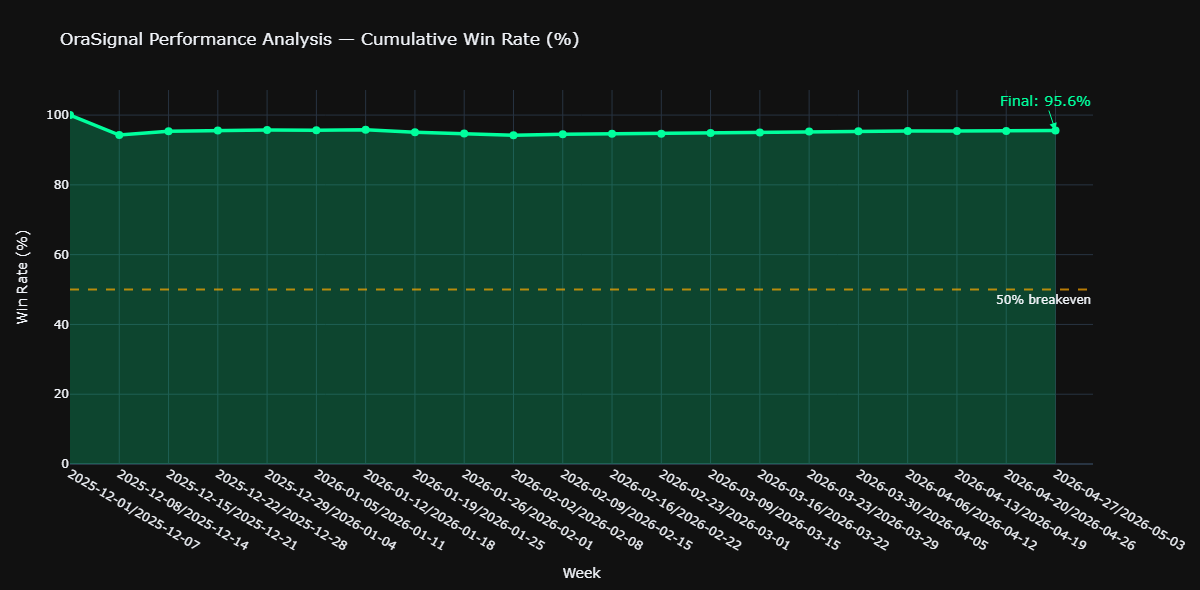
Therefore, trade diversity, trade volume, time in the market — ideally all combined — along with multiple profitable accounts and consistent win rates, are true indicators of strategy quality.
Conclusion
Apply this filter internally, and you will immediately eliminate the vast majority of websites, forum discussions, and social media content — likely over 90% of it.
Because, frankly, most of it is noise.
What is truly valuable will stand out clearly — not hidden behind colorful but empty promises.