

"The first principle is that you must not fool yourself."
Richard Feynman
On Scientific Truths in General — and Technical Analysis in Particular
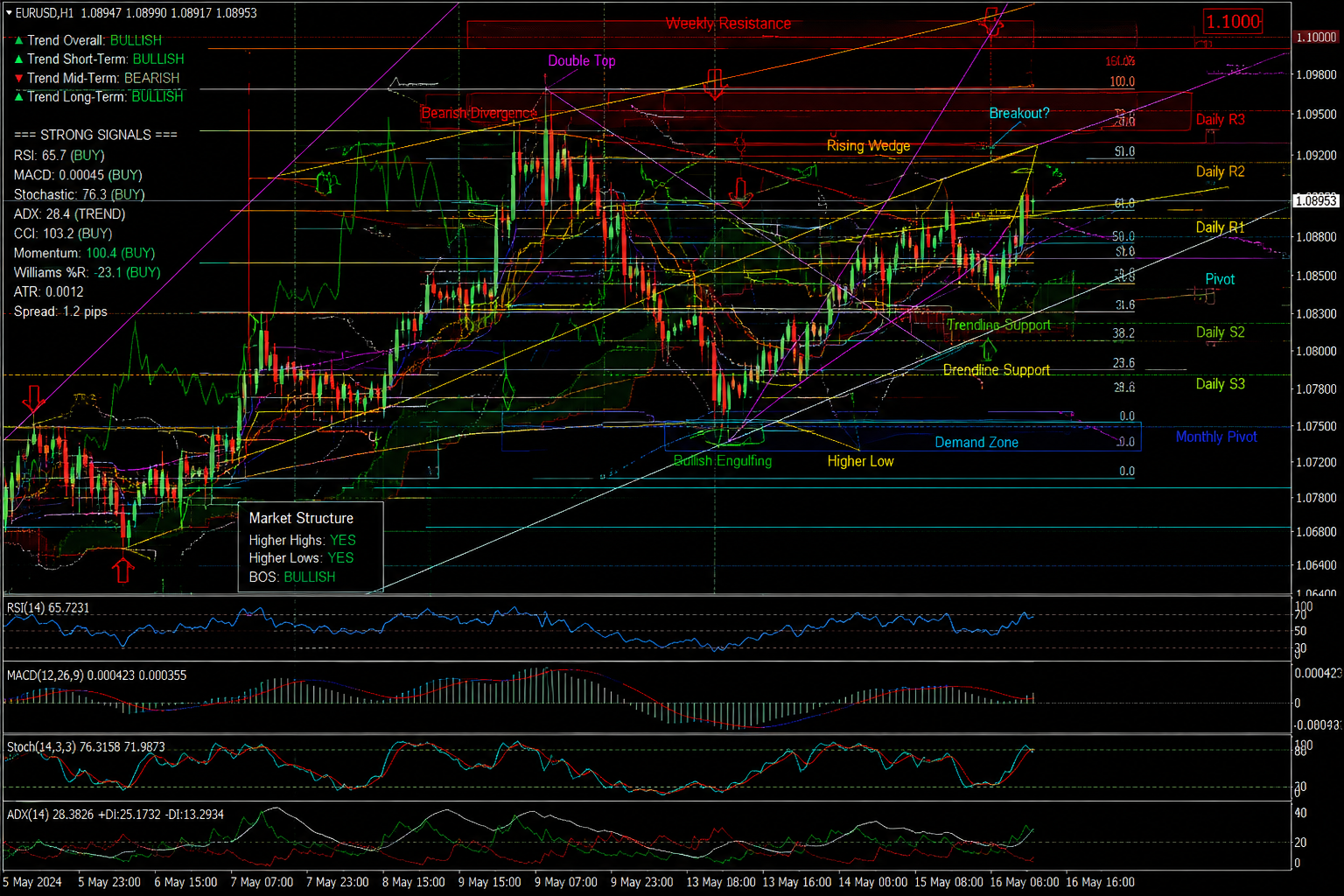
You will not find the usual technical analysis here.
No endless triangles, rectangles, arrows, levels, trendlines, or other sacred symbols of trading folklore.
That is precisely why we often seem like outsiders at the great celebration of trading culture.
The reason is simple.
We try to start with research rather than belief.
What Is a Scientific Truth?
Imagine thousands of studies conducted by different researchers, in different countries, using different datasets.
And imagine they all arrive at roughly the same conclusion.
For example, that technical analysis can provide an advantage.
A small advantage, but a real one.
Most often, we are not talking about miracles, but about a modest statistical edge.
What does that mean in practice?
Very simply.
If random decisions produce a 50/50 outcome, then good technical analysis may shift those odds slightly in your favor.
That is useful.
But it is not magic.
The Winter Analogy
Imagine it is minus twenty degrees outside.
You need to go outdoors.
What would you wear?
Obviously, a scarf would help.
But nobody in their right mind would say:
"Since I have a scarf, I no longer need winter clothing."
The scarf helps.
But the scarf is not the entire protection system.
That is exactly how we view technical analysis.
If research shows that it works, denying it makes little sense.
But if the same research shows that its effect is limited, then turning it into the center of the trading universe makes little sense as well.
Where the Mistake Begins
The mistake begins when people confuse a useful tool with the source of all answers.
Markets are complex.
Very complex.
And expecting to beat them solely through a few lines drawn on a chart is much like expecting to survive a snowstorm with nothing but a scarf.
It helps.
But it is not enough.
That Is Why We Look Elsewhere
We do not ignore technical analysis.
We simply do not consider it the main source of advantage.
If something exists that can provide a significantly stronger edge, that is where our attention should be directed.
That is why we focus on studying market structure, statistics, large-scale behavioral patterns, and artificial intelligence systems.
Not because trendlines are useless.
But because we are not interested in adding another scarf.
We are interested in understanding the entire winter outfit.
Final Thought
The beauty of science is that it allows us to evaluate ideas not by belief, but by the size of their actual effect.
Technical analysis may help.
The real question is:
How much?
And if there are methods capable of doing substantially better, then that is where attention should be focused.
At least, that is what we are trying to do.